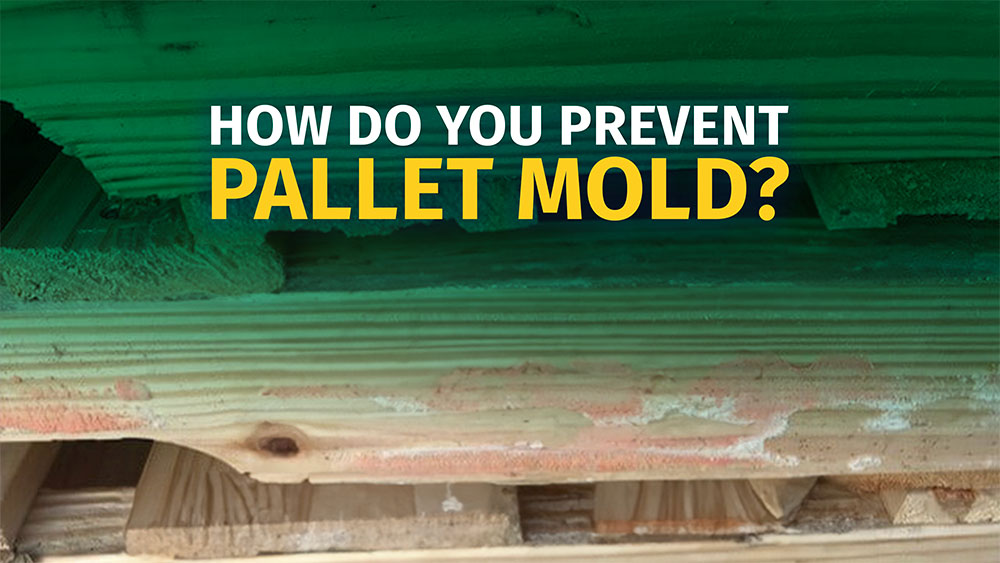
How to Ensure Mold-Free Pallets for Your Supply ChainEver struggled with wood pallet mold issues in your logistics process? Worry no more! This article discusses pallet mold prevention, explores best practices for handling and storage, distinguishes wood stains from mold on pallets, and considers chemical treatment options. Here are some key quick tips to keep your wood pallets pristine.Best Practices for Pallet Mold Prevention1. Unpack loads quicklyWhen a fresh shipment arrives, it’s crucial to think of that trailer as more than just transport—it’s a potential incubator for moldy wood. It may seem obvious, but a humid and dark trailer is an invitation for trouble. To prevent pallet mold, it is essential to offload wood pallets swiftly. Work closely with your pallet supplier to coordinate delivery and internal availability, ensuring quick unloading into suitable storage.2. Don’t leave pallets in the rainLeaving pallets exposed outdoors, even momentarily, is not recommended. A transient shower can initiate problems. Experts note that “free water may be ephemeral on the wood surface, yet it might take merely days for a fungus to germinate and inflict damage.”3. Ensure proper storage conditionsA dry, well-lit, and ventilated area is the ideal home for storing pallets. For outdoor sheltered storage, align the pallet ends with the wind to boost airflow. Within warehouses, avoid the temptation to stack pallets in dim, cramped corners. Select a location that supports better ventilation and lighting.4. Maintain spacing to promote circulationTo further prevent pallet mold, maintaining spacing between rows of pallet stacks is vital for circulation. Orient the pallet openings towards the breeze and keep rows separate. This is particularly important for stringer pallets, whose design can restrict airflow. Airflow, even as gentle as a few feet per second, can significantly prevent mold growth. Elevating stacks about 6 to 8 inches from the ground also averts direct contact with residual moisture.5. Treat an occurrence of pallet mold as a non-conformity in your quality processView any instance of pallet mold as a deviation in your quality control framework. Implementing a corrective and preventive action (CAPA) plan can unearth the root causes, like staffing issues, forklift training deficits, or lack of covered storage, leading to sustainable solutions.6. Mold or stain? One common misinterpretation is confusing mold with wood stains such as Bluestain, which leaves a blue or gray tint but does not pose health risks or compromise the wood. To test, gently rub the discolored wood. Contrary to Bluestain, which seeps into the timber core, mold is superficial and can be wiped away, as highlighted in a recent NWPCA brochure.7. Consider Chemical Treatment for Wood Pallet MoldDepending on your operational guidelines, chemical treatments might be viable. A spectrum of ingredients approved or exempted by bodies like the EPA and FDA are available. Consult with your pallet supplier on suitable chemical solutions that match your specific needs.Summing Up: The Path to Mold-Free PalletsTo wrap it up, obtaining dry pallets from a reputable pallet supplier and adopting preventative actions to sustain dry and ventilated conditions significantly minimizes the risk of pallet mold, even as temperatures rise. Recognize the distinction between mold and natural staining, and examine the use of chemical treatments if applicable. Adhering to the guidance provided above will tremendously fortify your fight against mold in pallets.Revisit our previous Mold Prevention TipsMiss our initial thoughts on pallet mold prevention? Our first article, ‘Quick Tips for Mitigating Mold on Pallets,’ offers a treasure trove of wisdom. It covers the importance of careful vendor selection, dispels the myth surrounding heat treatment’s efficacy against mold, debates the advantages of softwood over hardwood pallets in mold scenarios, and stresses heightened vigilance as the temperate seasons approach.