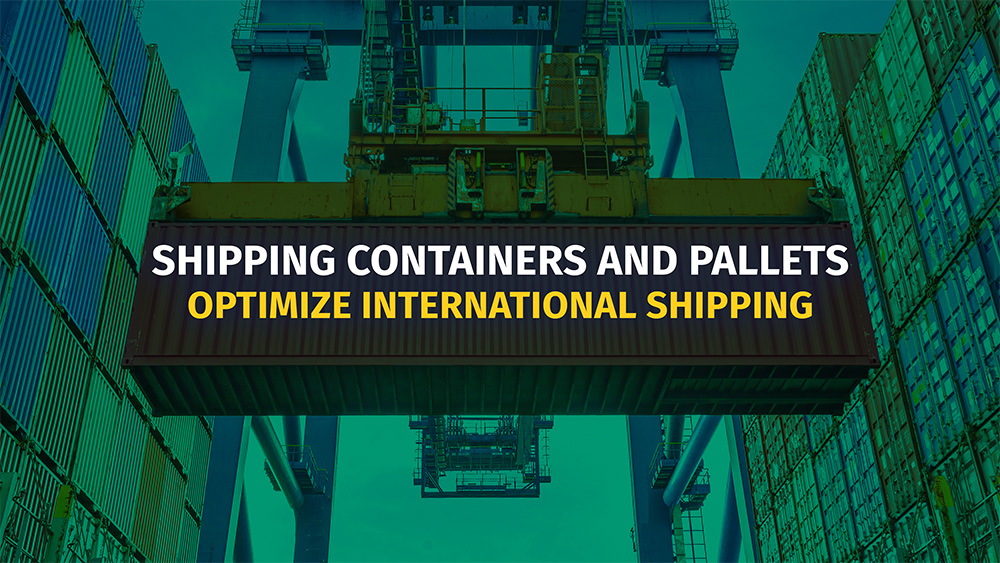
At the Port of Savannah, rows of towering Konecranes ship-to-shore cranes loom over the Garden City Terminal. Their long booms position above a vessel freshly arrived from Yantian, Shenzhen, with electronics, apparel, and household goods. An operator locks the spreader onto a 40-foot shipping container, lifts it smoothly from the stacked tiers, and guides it toward the shore. Below, yard trucks methodically shunt each container to the terminal yard as the crane returns for the next.
Savannah’s efficiency lies in its seamless connections. Containers bound for inland markets are double-stacked on intermodal railcars headed to Atlanta, Memphis, or Chicago. Regional cargo is staged for drayage trucks, while the cranes sort empty containers for cleaning and reuse. Nearby, export loads of Georgia poultry, resin, and paper wait for the vessel’s return voyage. With each giant crane capable of 40 moves an hour, even the largest ships get turned around quickly, keeping freight flowing through one of America’s fastest-growing ports.
But what’s missing from this picture? While professionals focus on considerations such as port location, terminal efficiency, turnaround times, intermodal links, and the total cost of handling cargo, that’s not the whole story. At our own peril, we too often fail to pay attention to the wooden platform that carries the load: the pallet. Smart decisions about shipping container pallets can be crucial to optimizing your global supply chain.
While little data is available regarding palletized international shipping, we can say with certainty that a great deal of containers and pallets are on the move. According to the UNCTAD Review of Maritime Transport 2024, total global loaded containerized trade reached about 158.7 million TEU (twenty-foot equivalent units) in 2023, a slight decline of 0.14% compared to 2022. For 2024, volumes are forecasted to recover to 166.6 million TEU, up roughly 5%.
To put things into perspective, a TEU can hold roughly 10 regular pallets. That would translate into almost 1.6 billion pallets moving internationally in 2023, if all containers contained palletized shipments. Even if we conservatively estimate that half of the containers are floor loaded, that still equates to roughly 800 million pallet movements annually.
To Palletize or Not to Palletize
When an international shipper decides whether to floor load or palletize a container, the first consideration is often space utilization versus handling efficiency. Floor loading allows the shipper to use nearly every cubic inch of the container, which can lower per-unit freight costs, especially for lightweight, high-volume products like apparel, small electronics, or housewares. However, it comes at the expense of longer loading and unloading times, higher labor requirements at the destination, and greater potential for cargo damage.
Palletizing, on the other hand, sacrifices some space inside the container (because pallets occupy volume and create voids) but enables much faster handling with forklifts. This can reduce demurrage or detention costs by speeding container turnaround at busy terminals and minimize warehouse labor.
The cost of pallets themselves also factors in, as does local labor pricing. In lower-cost labor markets like parts of Southeast Asia, floor loading may remain common because hand-stacking and de-vanning at the destination is less expensive, while particular pallets may be challenging to source. However, in higher-wage countries where labor costs are rising, palletizing often makes more sense because forklifts and mechanized handling reduce the need for expensive manual labor.
Industry and commodity type also play a big role. Food, beverage, and pharmaceutical products are often palletized, both for hygiene reasons and to ensure compatibility with cold-chain or automated warehouse systems. Heavy commodities like canned goods, machinery, or chemicals are likewise palletized due to weight and safety concerns. In contrast, lightweight or irregularly shaped goods like tires or bulk textiles are more likely to be floor loaded.
A hybrid option available to shippers is to ship floor-loaded freight but then palletize it at a satellite facility or cross-dock near the consignee’s location. This approach provides freight savings for ocean shipping while addressing the receiver’s palletization needs.
Ultimately, the shipper balances container fill rates, pallet costs, handling speed, labor availability, and customer expectations to determine the most effective method.
What Pallet to Choose
You may have decided to palletize, but your job is far from done. The pallet or other solid wood packaging must be ISPM 15 certified and stamped to ensure acceptance into the country of destination. Having pallet stamps oriented for ease of inspection can be helpful. Note that ISPM 15 approved pallets should also be dry to help manage condensation buildup in the shipping container, which can lead to the growth of mold, softening of paper-based packaging, rust, and other problems.
And even if the receiver requests a particular pallet, there is still the matter of finding a source for it. Where enough demand exists, however, domestic pallet producers will rise to fill the void. For example, PalletOne mass produces standard CP pallets, most typically found in Europe, to help their customers deliver the pallets required by their customers.
Material handling compatibility is another requirement. Pallets must be compatible with handling equipment at both ends of the journey.
Another tactic employed by some shippers is to have a pallet size that optimizes the fill of the container, rather than adhering to standard industry sizes. An example of this was the creation of the AIAG Intercontinental Pallet Standard (ICPS), which specifies a footprint of 1,140 mm × 980 mm.
Reliable and cost-effective, pallets are embedded so seamlessly into logistical operations that they are almost invisible. And yet, careful selection and management are crucial to supply chain success. While pallets are not widely visible in container ports like Savannah, their importance and the need for informed pallet decisions are crucial. Reach out to PalletOne to help ensure your shipping success.