Although steel is known for its strength, protective packaging is crucial to prevent damage during transport, especially from environmental factors and handling. Damage to steel products in the supply chain, including corrosion, impact, and abrasion, is a significant issue. Packaging not only ensures product quality but also protects the safety of workers handling these materials. Let’s review the supply chain challenges of shipping steel, the leading steel products, and packaging best practices for protecting product integrity and ensuring safe handling.
The U.S. Steel Industry and Leading Products
Until the 1970s, the U.S. was the world’s largest steel producer. Today, the U.S. continues to significantly contribute to the global market, with production focusing on flat-rolled products, long products, and tubular goods used in industries such as automotive, construction, and energy. The U.S. industry has been at the forefront of adopting advanced technologies, including energy-efficient electric arc furnaces (EAFs), which have less environmental impact than traditional blast furnaces.
Quality Challenges for Shipping Steel Products
Shipping steel products presents several quality challenges due to the material’s sensitivity to environmental conditions and handling risks during transport. Corrosion, particularly rust, is a major concern. Steel is highly vulnerable to moisture, and even brief exposure to water, humidity, or salty air can compromise its integrity, especially in structural applications. This risk is even greater in humid climates or sea transport, where salty air accelerates rust formation, making moisture barriers essential.
Another significant challenge is impact damage. Steel products like coils, bars, and sheets are heavy and unwieldy. Mishandling during loading and unloading can lead to dents, warping, or bending, reducing the material’s structural integrity. Abrasion also poses a risk, particularly for finished steel products like cold-rolled sheets that require smooth surfaces. When steel surfaces rub against each other or other objects, scratches and imperfections can occur. Dividers, corrosion-resistant lumber spacers and cushioning materials are essential to prevent this damage.
Finally, worker safety is a critical concern. The weight and exposed sharp edges of steel items and the risk of load instability for products like pipes and sheets pose serious safety risks. Proper worker training, personal protective equipment, and mechanical lifting tools are essential for reducing injuries.
Leading Steel Products and Packaging Considerations
Here are some leading steel products and best practices for packaging them:
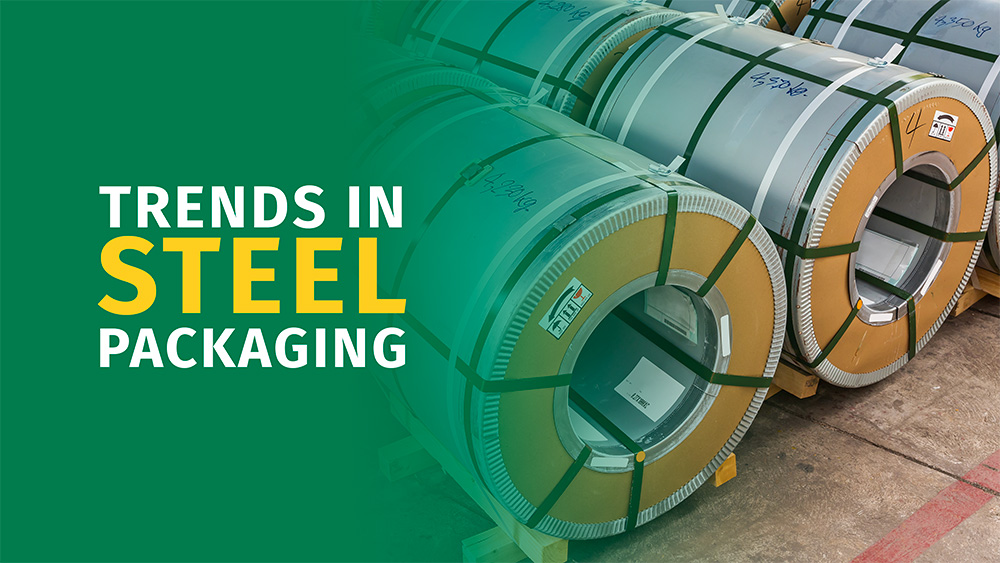
- Coils: Coils, used extensively in automotive, home appliances, and construction, are vulnerable to handling damage, especially at the edges, and to corrosion if exposed to moisture. Coils should be secured with robust strapping and dunnage to prevent movement and edge protectors should be used to prevent damage from tension. Moisture-resistant wrapping, such as stretch film or laminated foil, helps prevent corrosion. Coils are often transported on pallets to keep them off the ground, avoiding direct contact with moisture.
- Sheets and Plates: Steel and aluminum sheets and plates are crucial for shipbuilding, aerospace, and construction industries. Both items face risks from dents, scratches, and corrosion. They are best transported on pallets or in wooden crates. Protective coatings like oil or plastic sheeting can prevent scratches, while corrugated dividers or wood spacers can separate stacked sheets to avoid abrasion. Moisture barriers like polyethylene films further guard against corrosion.
- Tubes and Pipes: Widely used in plumbing, gas transmission, and structural applications, tubes and pipes are prone to surface damage and deformation if not packaged correctly. They require cradling supports or other containment solutions, such as the UFP L-Block, to prevent instability and impact damage during transit. Strapping, dunnage, and specialized racks help ensure secure transport. End caps prevent debris or moisture from entering, and plastic or corrosion-resistant coatings protect the outer surface.
- Bars: Metal bars, commonly used in construction and machining, are typically bundled with heavy-duty straps and placed on pallets for easier handling. To prevent corrosion, they are often coated with oil or wax. Higher-value bars may be wrapped in plastic or paper to prevent surface damage during storage and transit.
- Steel Parts: Steel parts are valued for their strength and durability in industries such as automotive and construction. Packaging must balance part quality, pack density, and safe handling. Less sensitive parts like hardware may be stored in bulk, while more delicate components require foam dunnage or dividers to avoid damage. Coatings and barriers may also be used to protect surfaces.
While steel’s strength is unquestionable, its quality can be compromised during transport without proper packaging. Whether it’s the stability of pipes or the smoothness of cold-rolled sheets, selecting robust protective measures can help you deliver on customer expectations. Why not contact PalletOne today to learn more?