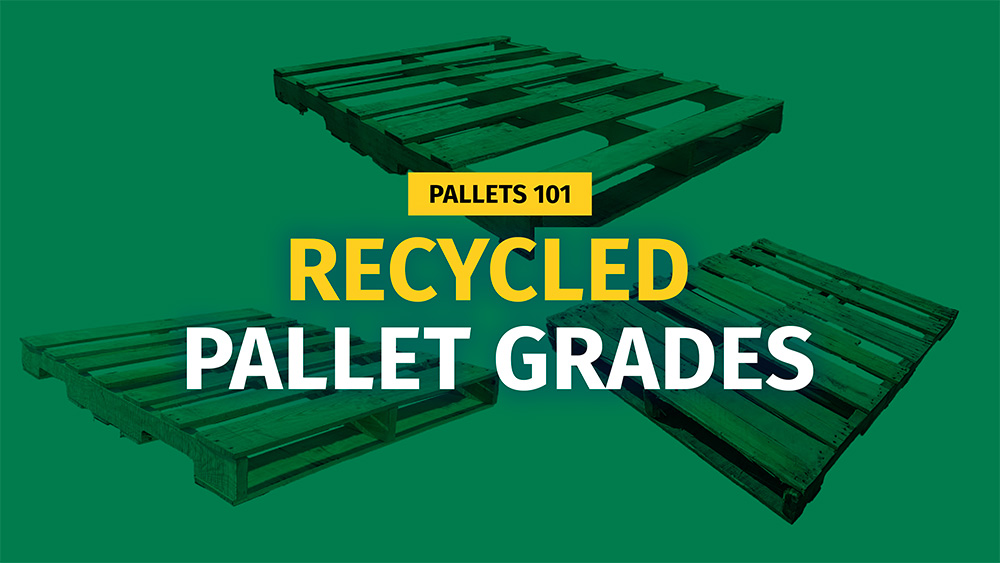
The industry categorizes recycled pallets into grades defined by certain key traits. We have three grades — Premium A (also known by terms such as AAA or #1 Premium), Standard A (#1), and B (#2) grade. Knowing the difference can make a huge difference in your supply chain.
When buying wood pallets, your basic choices are new or recycled. New pallets offer advantages such as consistent, precision quality, a clean new appearance, and ease of customized design to perfectly fit your application, whether automation equipment, heavy or sensitive loads, optimizing freight, or other challenges.
On the other hand, recycled pallets are more affordable and readily available but in a more limited range of sizes – mainly 48×40”. Recycled pallets, although sorted by grade, have a degree of variability within each grade. They are not as consistent in condition, specification, and appearance as new pallets, but they do a great job in many pallet use cases. If you opt for recycled pallets, understanding the basics of recycled grade terminology and potential variability will enable you to make the best decision for your supply chain.
There is some regional variation; the numbered grades are more common in the West, but sometimes, even two recyclers in the same neighborhood anywhere in the country will use different terminology. Unfortunately, we can’t rely on standards documents for clarification. For example, NWPCA’s Uniform Standard for Wood Pallets provides only a general description of recycled pallet quality.
As such, informal recycled pallet grades have solidified over the years, aided partly by the growth of coast-to-coast pallet suppliers such as PalletOne. Recycled pallet grades are generally accepted as follows:
Premium A Grade pallets are at the top of the recycled pallet quality scale. These pallets are in excellent condition and bear minimal signs of wear, appearing nearly new. Their appearance is typically uniform, often free from stains, cracks, or visible damage.
Due to their high quality, these pallets are well-suited for industries prioritizing strength and appearance, such as retail and manufacturing. They provide a stable, aesthetically pleasing solution where a near-new pallet is required, making them popular for applications where a consistent, attractive look is essential.
Standard A grade pallets are a slight step down from Premium A in terms of condition and appearance, but they still maintain high usability and reliability. These pallets may show some moderate wear, with minor repairs and reinforcement. Standard A pallets remain structurally sound despite these signs of use and maintain a relatively uniform look.
They are commonly used in warehouses or general distribution settings where a reliable, durable pallet is needed, though appearance is less of a priority. Their cost-effectiveness and consistency make them a practical choice for businesses that require sturdy pallets without needing the pristine quality of Premium A grade.
B Grade pallets fall lower on the quality scale, showing significant wear and a visibly aged appearance. These pallets often have multiple repairs and reinforced stringers, which may include added plates or even companion stringers to bolster their structure. B Grade pallets may have more noticeable weathering.
While they may lack the aesthetic appeal of the higher grades, customers value B grade pallets for their cost efficiency. They are ideal for one-way shipping, non-display applications, and scenarios where uniform appearance is less important than utility.
Other Pallet Grade Considerations
Customers often ask for “food grade” recycled pallets. In this regard, shippers of food products should ensure that their pallets comply with Food Safety Modernization Act (FSMA) transportation equipment requirements. Under FSMA, wood pallets must be maintained in good condition to prevent contamination risks. This includes ensuring pallets are free from mold, chemical residues, or visible contaminants. Pallets should be inspected regularly to ensure they are structurally sound and do not harbor pests. Read this article for a deeper dive into the topic of food grade pallets.
Heat treatment (HT) is another topic that some customers bring up. While HT pallet stamping is required for ISPM 15 compliance for export pallets, a misconception remains that heat treatment can make a pallet “food grade.” That is not the purpose of heat treatment.
In summary, each pallet grade serves distinct needs in the supply chain, offering options that balance quality, appearance, and budget. Whether a company requires the visual consistency of a Premium A grade, the reliable sturdiness of a Standard A, or the affordability of a B grade, these categories provide flexibility for many storage and shipping applications.
Working with an experienced national pallet supplier such as PalletOne can help ensure your supply chain gets the maximum value from your spend on recycled pallets. Give us a call today.